Stack and Queue 堆疊與佇列
🐳 寫在前面
這邊想要紀錄一些開始念資料結構之後的初步感想,讓未來的自己可以回顧。可能不一定是對的,但就是感想。
雖然不同的程式語言會因為不同的特性提供一些資料型態,比如 JavaScript 有 number, string, boolean, array, class 等等。資料結構比較像是一種以現有的資料型態去設計某種結構,該種結構之所以被設計出來可能是因為時間與空間上的效能考量,或是用來解決需求的問題。
所以學資料結構的時候,除了搞懂每個資料結構的長相、特性、刷題,更需要知道一些實際的應用情境,想要解決什麼樣的問題。
🐳 Array and Linked List
在理解什麼是 stack 跟 queue 之前,要先理解 array 和 linked list 這兩種不同的資料結構。因為 stack 和 queue 其實可以用 array 或是 lnked list 來實作。
array 應該就不用特別解釋了,但如果第一個學習的程式語言是 JavaScript,又沒有學過資料結構的話,可能不會遇到 linked list 這種資料結構。
以我目前的理解來說。C 語言的 array 在宣告的時候也要同時宣告長度,也就是說宣告了 array 需要用到的記憶體用量,所以 array 的長度會是固定的,沒有辦法動態調整。
如果想要使用 C 語言創造一個動態長度的陣列,可以拿取記憶體中任一的單一區塊來存放 data(稱為節點 node),亦即放入值和指標,然後用指標指向下個節點(node),串成一個鍵結串列,類似下圖的概念:
🦀 Array 和 Linked List 的簡單比較
| array | linked list | |
|---|---|---|
| 優點 |
|
|
| 缺點 |
|
|
🐳 Stack 堆疊
Stack 和 Queue 都是可以用來加入資料、取回資料的抽象資料結構,只是他們加入資料和取回資料的 order 不同。
Stack 是採取 LIFO(last-in, first-out) 的方式。最後加入 stack 的資料會最先被讀取。加入資料的方式稱為 push,取回資料的方式稱為 pop。如下面的示意圖:
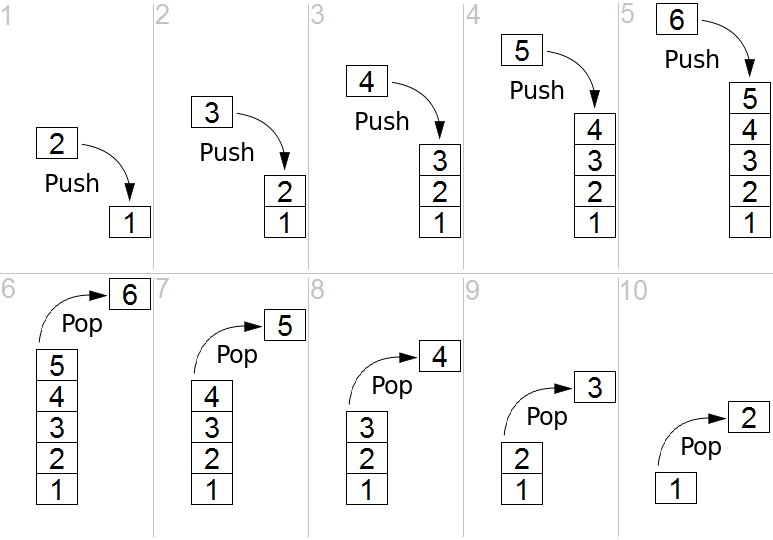
stack 的介面描述大致如下:
Stack ADT (abstract data type):
create(): create an empty stackisFull(): return true if the stack is full, otherwise return falseisEmpty(): return true if the stack is empty, otherwise return falsepush(new-item): add a new item to the top of the stackpop(): remove the top element from the stack and return it to the callertop(): return the top element of the stack without removing it
🦀 用 Array 來實作 Stack
- JavaScript
class Stack {
  constructor() {
    this.items = [];
  }

  get isEmpty() {
    return this.items.length === 0;
  }

  get stackSize() {
    return this.items.length;
  }

  push = (item) => {
    this.items.push(item);
  };

  pop = () => {
    if (this.isEmpty) {
      return null;
    }
    return this.items.pop();
  };

  top = () => {
    return this.items[this.stackSize - 1];
  };

  // isFull 省略
  // 因為 JavaScript 的 array size 動態的,所以沒有特別設計的話就不會 full
}
🦀 用 Linked List 來實作 Stack
- JavaScript
// a linked list node
class Node {
  constructor(data, next) {
    this.data = data;
    this.next = next;
  }
}

// a stack using linked list
class Stack {
  constructor() {
    this.top = null;
    this.size = 0;
  }

  get isEmpty() {
    return this.size === 0;
  }

  push = (item) => {
    const newNode = new Node(item, this.top);
    this.top = newNode;
    this.size++;
  };

  pop = () => {
    if (this.isEmpty) {
      return null;
    }
    const poppedNode = this.top;
    const newTopNode = this.top.next;
    poppedNode.next = null;
    this.top = newTopNode;
    this.size--;
    return poppedNode.data;
  };

  getTop = () => {
    if (this.isEmpty) {
      return null;
    }
    return this.top.data;
  };
}
🐳 Queue 佇列
Queue 存取資料的順序是採取先進先出的方式,也就是 first in first out(FIFO)。將資料存入 Queue 裡面稱為 enqueue,將資料從 Queue 中取出稱為 dequeue。概念如下圖所示:
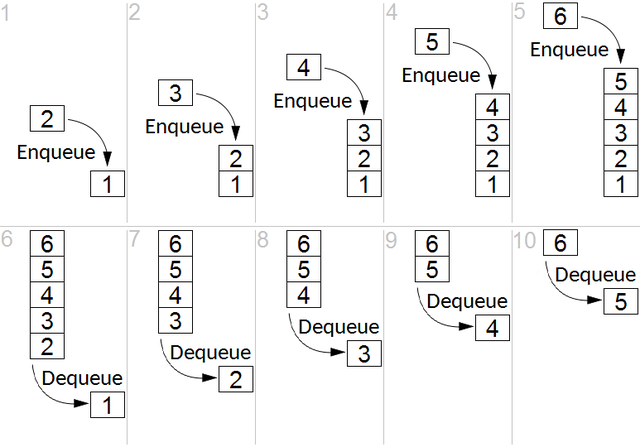
Queue ADT:
enqueue(): adds an element to the rear of the queuedequeue(): removes an element from the front of the queueisEmpty(): determines whether the queue is emptyisFull(): determines whether the queue is fullfirst or front element: return the element at the front of the queue if it is not empty
🦀 用 Linear Array 來實作 Queue
- JavaScript
class Queue {
  constructor() {
    this.items = [];
  }

  get isEmpty() {
    return this.items.length === 0;
  }

  getFront = () => {
    return this.items[0];
  }

  enqueue = (item) => {
    this.items.push(item);
  };

  dequeue = () => {
    this.items.shift();
  };
}
🦀 用 Circular Array 來實作 Queue
- JavaScript
class circularQueue {
  constructor(arraySize) {
    this.items = new Array(arraySize);
    this.rear = this.items.length - 1;
    this.front = 0;
    this.size = 0;
  }

  get isEmpty() {
    return this.size === 0;
  }

  get isFull() {
    return this.size === this.items.length;
  }

  enQueue = (item) => {
    if (this.isFull) return null;
    this.rear = (this.rear + 1) % this.items.length;
    this.items[this.rear] = value;
    this.size++;
  }

  deQueue = () => {
    if (this.isEmpty) return null;
    this.front = (this.front + 1) % this.items.length;
    this.size--;
  }

  getFront = () => {
    return this.isEmpty ? -1 : this.items[this.front];
  }

  getRear = () => {
    return this.isEmpty ? -1 : this.items[this.rear];
  }
}
🦀 用 Linked List 來實作 Queue
- JavaScript
class Node {
  constructor(data, next) {
    this.data = data;
    this.next = next;
  }
}

class Queue {
  constructor() {
    this.front = null;
    this.rear = null;
    this.size = 0;
  }

  get isEmpty() {
    return this.size === 0;
  }

  enqueue = (item) => {
    const newNode = new Node(item, null);
    if (!this.front) {
      this.front = newNode;
      this.rear = newNode;
    } else {
      this.rear.next = newNode;
      this.rear = newNode;
    }
    this.size++;
  }

  dequeue = () => {
    if (!this.front) {
      return null;
    }
    const dequeuedItem = this.front;
    const nextItem = this.front.next;
    if (this.front.data === this.rear.data) {
      this.rear = null
    }
    this.front = nextItem;
    this.size--;
    return dequeuedItem.data;
  }

  getFront = () => {
    return this.front.data;
  }

  getRear = () => {
    return this.rear.data;
  }
}
🐳 實際應用
🦀 前端
Stack
- error call stack
- 瀏覽器的歷史紀錄
- 文本或是圖片編輯器的操作紀錄(可以用來做複製復原等等)
- javascript call stack(javascript 用來處理函數執行的方法)
Queue
- 瀏覽器的非同步處理(event queue / task queue)
- 通知功能
🦀 其他
Stack
- parse context-free languages
- evaluate arithmetic expressions(infix, postfix, prefix)
- function call, recursive call management
- reverse the input data
- traverse trees(preorder, inorder, postorder)
- DFS graph traversal
- eight queen problem
- maze problem
Queue
- OS 中的各種應用:ready queue、waiting queue、job queue、I/O Derive queue etc.
- buffering
- 基於佇列理論的計算機效能模擬
- 圖形的 BFS
- binary tree 的 level order traversal
🐳 Resource
- Linked List: Intro(簡介) by Chiu CC
- 你所不知道的 C 語言: linked list 和非連續記憶體 by jserv 大大